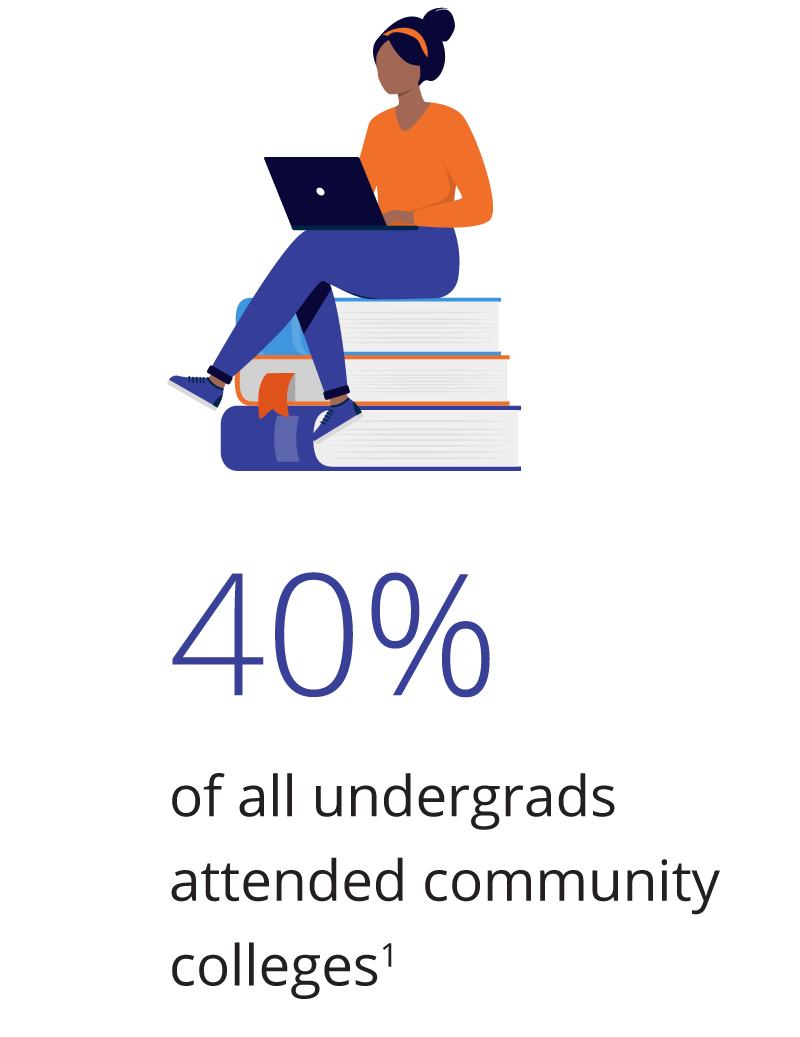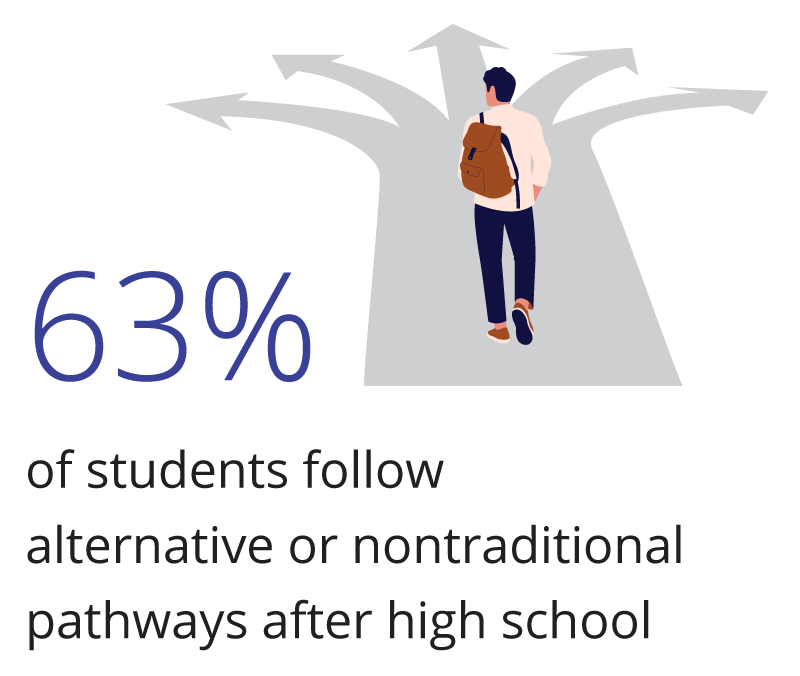
Source: YouScience, “2026 Post-Graduation
Readiness Report,” 4/28/26.
For a long time, the traditional four-year degree was seen as the expected path after high school. Today, the next step is starting to look a lot more flexible. Some young adults thrive in a traditional college setting. Others find their footing through hands-on training, professional credentials, or a little time to figure things out. And plenty of students end up doing some combination of all of the above. Now it’s less about any single approach and more about finding what fits. That can look different for every student as priorities and goals take shape. Here’s how that’s changing how students approach post-secondary education:
The Four-Year Degree Is Evolving
A traditional four-year college still makes sense for a lot of students, but the experience doesn’t always look the way it used to. More families are weighing factors such as cost, program quality, and return on investment before committing. And plenty of students are finding their own way through it, whether that means transferring between schools, blending public and private institutions, or taking longer than four years to finish. It’s still a well‑traveled path, but increasingly, it’s one students are shaping to fit their own priorities.