Paying for college can feel daunting, especially when it’s competing with the financial priorities you’re already juggling. How much should you save? Should retirement or paying down your own debt come first? And what happens if your savings aren’t enough to cover the full cost?
Fortunately, it doesn’t have to be an all-or-nothing proposition. Starting with a realistic look at your own finances, saving what you can, and planning ahead for the costs your savings may not cover can help you build an approach that works for your family. The key is finding the right balance among the priorities competing for your money.
Get Your Own Financial Footing First
It’s natural to want to put your child’s education first. But before making college savings your top financial priority, it’s important to take stock of your own financial foundation.
Consider how saving for college fits alongside your other financial priorities and how much you can comfortably dedicate to future college costs. Having savings available for unexpected expenses and continuing to prepare for retirement are important parts of that equation. So is managing your existing debt, particularly if you’re still paying off student loans of your own. Prioritizing higher-interest loans or making extra payments when you can may help reduce the amount of interest you pay over time. You can also explore whether loan forgiveness programs or employer benefits could make repayment more manageable.
And while you’re reviewing your workplace benefits, don’t overlook your retirement plan. If your employer offers a 401(k) match, consider contributing enough to receive the full match before putting additional dollars toward college.
You don’t have to choose between your financial future and your child’s. Finding the right balance can allow you to make progress toward both.
Start Saving When You Can
When it comes to saving for college, there’s no perfect time to start or amount to save. The earlier you begin, the more time your savings have to potentially benefit from investment growth. But even if college is only a few years away, setting something aside can still make a difference. Every dollar saved is one less dollar you may need to cover from income, financial aid, or borrowing.
Look for ways to make saving a regular part of your financial routine. Automatic contributions can help you stay consistent, but saving doesn’t have to look the same every month. Extra money from a bonus, tax refund, or gift can also provide opportunities to build college savings over time.
Where you put those savings matters, too. A 529 college savings plan offers tax advantages when savings are used for qualified expenses1 and can provide flexibility as your child’s needs and plans evolve. That can make it a valuable tool at different stages of planning for college, not just for families who start when their children are young. Please note, investment returns are not guaranteed, and you could lose money by investing in a 529 plan.
Whatever you’re able to save can become an important part of the bigger plan for how your family will ultimately cover the cost of college.
Understand What College May Actually Cost
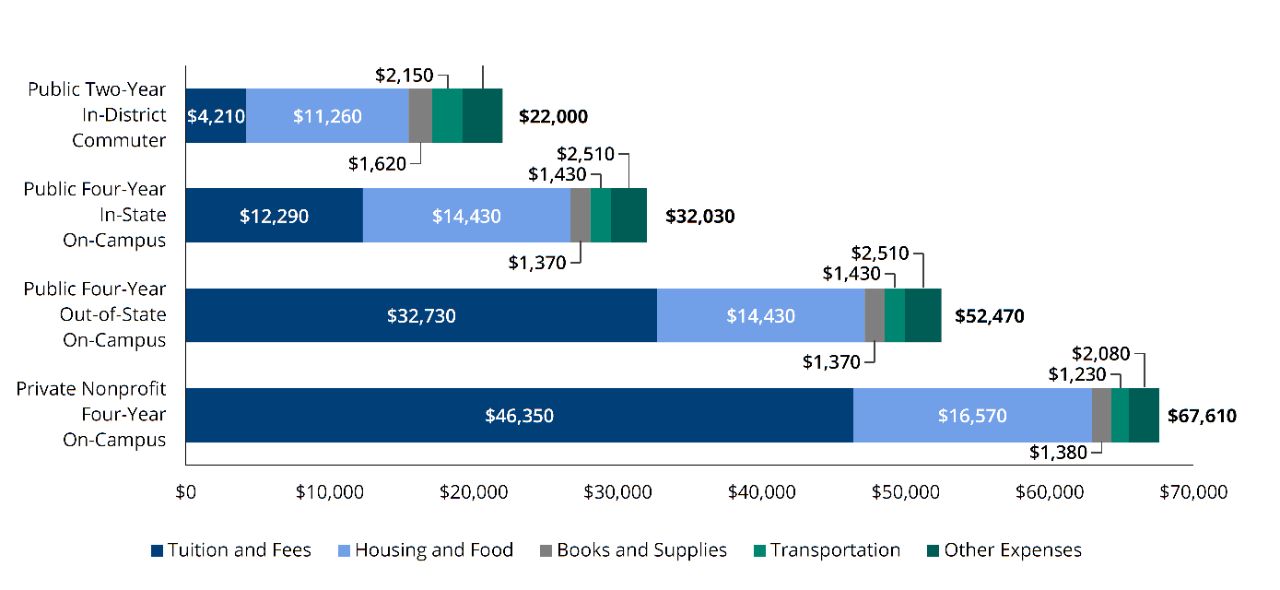
The cost of college can vary widely depending on the school your child chooses and the path they take. And tuition is only part of the picture. Room and board, books, supplies, transportation, and other expenses can all factor into the total cost, so looking at the full cost of attendance can give you a clearer idea of how to budget (FIGURE 1).
But the published price isn’t necessarily what your family will pay. Grants and scholarships can help bring that number down, while other forms of financial aid may help cover what remains. That makes it important to consider both the cost of a school and the aid your child may receive when comparing options.
And the cost can also be part of the college search itself. Talking about what your family can realistically afford before your child has their heart set on a particular school can help narrow the choices and avoid difficult financial tradeoffs later.
Once you have a better sense of the potential cost, you can start to see how far your savings may go and what may need to be covered another way.
FIGURE 1
College Costs Go Beyond Tuition
Estimated Annual College Costs by School Type and Expense
Make a Plan for the Rest
Your savings are just one piece of the puzzle. Financial aid, family contributions, and borrowing can all play a role in covering the remaining cost. Start by completing the Free Application for Federal Student Aid (FAFSA), which is used to determine eligibility for federal financial aid. Grants, scholarships, work-study, and other sources of aid may help reduce what your family needs to cover. If borrowing is still part of the plan, understand how much you and your child may need to borrow, what those loans could cost over time, and how repayment may fit into your child’s finances after college.
Most importantly, make these decisions together. Talk with your child about what you can realistically contribute, what you expect them to contribute, and how much either of you is comfortable borrowing. Having these conversations before applications turn into acceptances can help your child weigh their options with a clearer understanding of the financial tradeoffs.